m1nd-set research reveals solo travel will double in next five years
New research from m1nd-set reveals that the solo traveller market will double in the next five years, fundamentally reshaping airport, cruise, and ferry retail, with solo travellers emerging as the most intentional and high-value shoppers.
The global solo travel market, already a US$482.5bn segment, is projected to exceed US$1trn by 2030, establishing itself as a permanent fixture and defining cultural movement within the travel industry.
According to the research, solo travellers are not only rebounding but are setting new benchmarks for engagement and spending. The share of solo shoppers has increased significantly across all travel retail environments in 2024: the share of solo travellers shopping in cruise retail doubled from 8% to 16%; on ferries it rose from 20% to 25%, and in airport retail, their share increased from 25% to 28%.
The findings reveal that solo shoppers tend to both outspend and convert more than the average traveller. While just under four in ten solo travellers visit the duty free shops, their conversion rate is 71%, five points higher than the global average (66%). Their average spend is also higher at US$133 (vs US$129 on average), with Jewellery & Watches, Fashion, and Electronics commanding the highest spend.
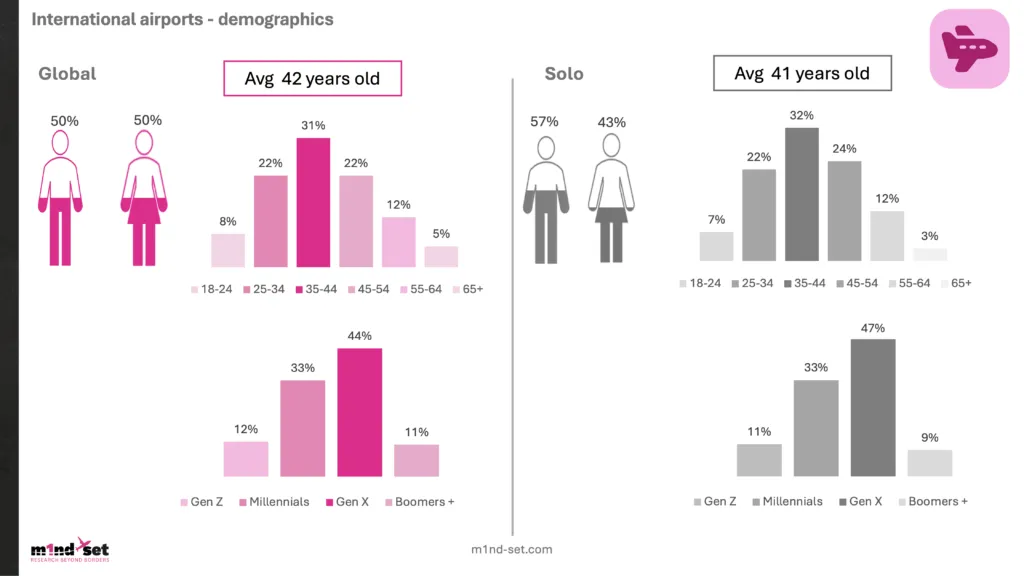
The research underlines the distinctly high value of the solo buyer profile in airports. Solo shoppers are skewed toward Gen X and are more likely to be travelling for business (42% vs 27% on average) or in a premium class (31% vs 24% on average). While women dominate the overall solo travel market, 57% of solo buyers in airports are men. The solo traveller segment is also highly intentional.
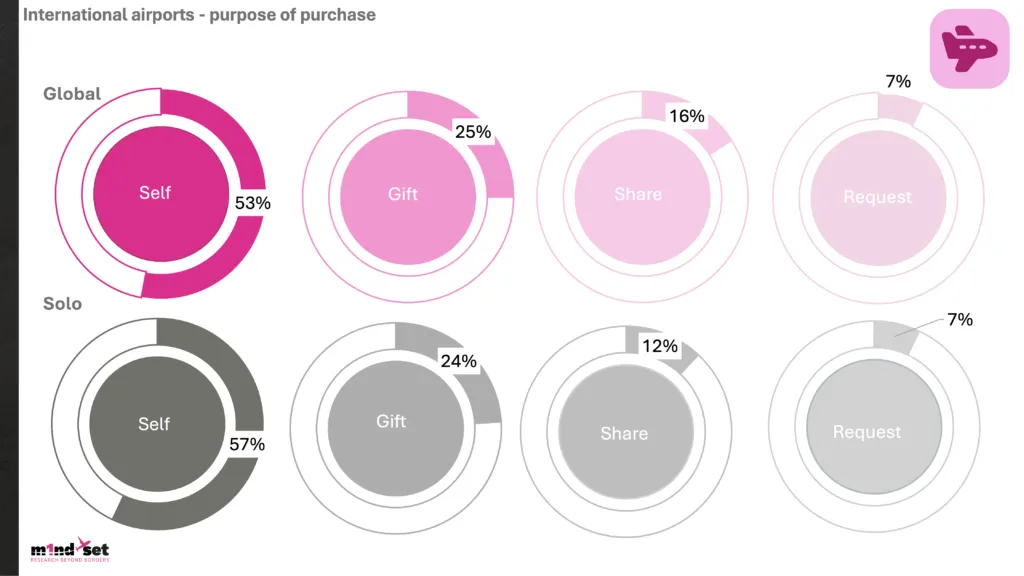
They prioritize service quality, product authenticity, travel retail exclusives and store atmosphere above the average shopper, the research reveals, with 57% of solo buyers purchasing for themselves (vs 53% globally). Furthermore, 58% of solo buyers in airports actively compare prices, highlighting their discerning nature and focus on finding genuine value.
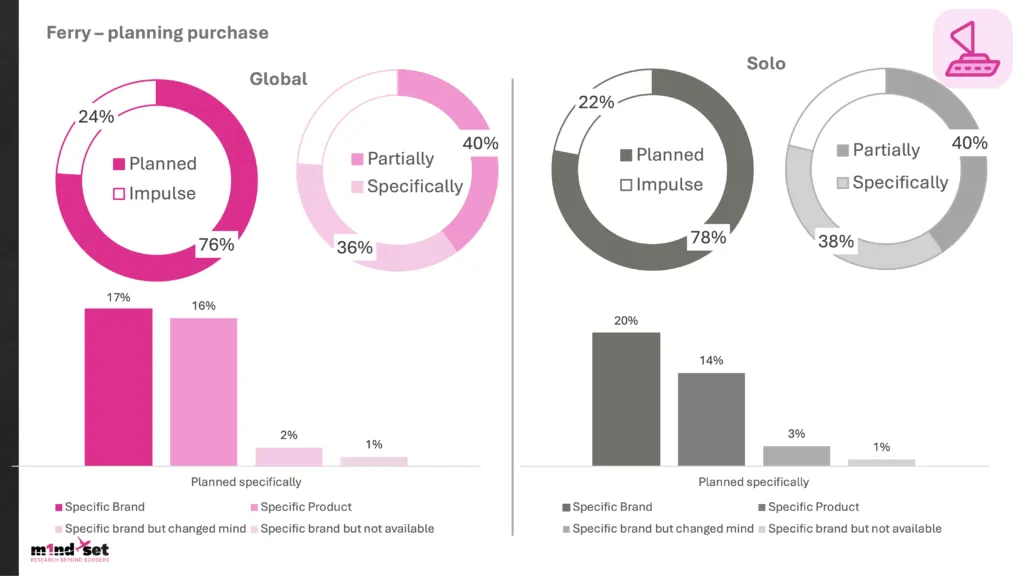
The research also reveals markedly different buying patterns in maritime retail environments among solo travellers, calling for tailored retail strategies. Solo travellers on ferries are typically represented by Gen Xers (44%) and show a strong tendency to plan their duty free shopping, with 78% of purchases by this segment planned in advance of their ferry trip. While their conversion rate is high at 83% (vs 78% global), their average spend is slightly lower than the average ferry traveller (US$165 vs US$172).
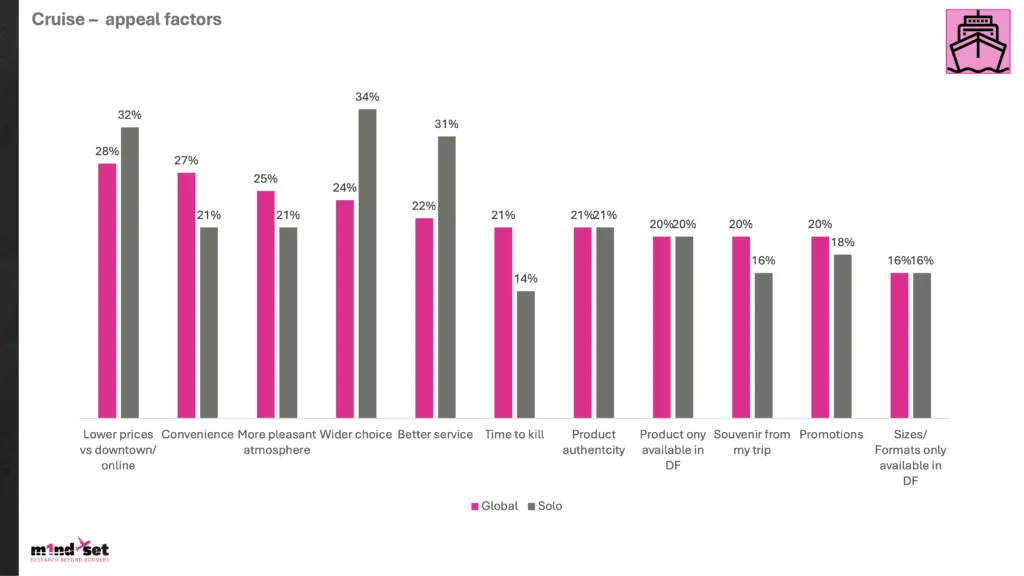
The growth in maritime environments, where solo travel has doubled on cruise ships since 2023, highlights the urgency for the industry to adapt, according to m1nd-set. The findings reveal that the cruise retail environment gives rise to more impulsive buying behaviour decisions. Twenty-nine percent of solo passengers buy on impulse, well above the 20% among the general cruise traveller population. Solo cruise shoppers are also younger, led by Millennials (52%). The research highlights their importance as high-value customers: their conversion rate significantly exceeds the global average (78% vs 65%), and their average spend also surpasses the norm ($203 vs $196).
The research also highlights the critical role of human connection and staff interaction. According to m1nd-set, solo shoppers are highly receptive to positive staff interaction, and staff engagement is proving to be a critical conversion driver across all travel retail environments.
m1nd-set owner and CEO, Peter Mohn said: “Solo travel represents a structural shift that redefines how people consume travel and related goods and services. Sixty-one percent of solo passengers engage with sales personnel on ferries, and an impressive 86% of these interactions positively influenced their buying choice, making it the most staff-sensitive channel.
“On board cruise ships, while fewer solo travellers engage with staff (54%), the impact remains strong: 84% of those who do engage with the staff are influenced to buy, compared to the global average of 79%.”
“In airport retail,” Mohn continued, “the numbers are lower than on the ferries and cruise ships but still above average. Fifty-two percent of solo buyers interact with sales staff, compared to 49% on average, and 77% of these interactions positively influenced the purchase decision, compared to the global average of 74%. Given that solo shoppers clearly value personal attention and authentic advice, it is important that retailers ensure sales teams are both well-trained and approachable.
“The crucial link to conversion is beyond any doubt the friendly and well-informed staff, demonstrating that personal and premium service is indispensable in converting this high-value segment. Staff who can combine product knowledge with genuine engagement will have a notably higher conversion potential.”
link